
GALERA · Heritage and traditional life
Hemp: the fibre that shaped Galera
Some of Galera’s stories can be discovered by following the journey of a fibre. Hemp linked fields with drying grounds, soaking pools and workshops, providing work for many families. Before the plant became a rope or the sole of an espadrille, it passed through a long sequence of tasks, each preparing the way for the next.
A crop with connections beyond the village
Its importance extended beyond domestic use. Hemp was used to make ropes and sails, and in the eighteenth century its production attracted the interest of the naval authorities in Cartagena. This connection invites you to imagine the links between an inland village and the needs of shipping: behind an apparently humble fibre lay farming, skilled trades and commerce.
From stems to fibre
The process began by pulling up and drying the plants. The bundles were then submerged in pools for about twenty days, one of the stages that prepared them for separating the fibre from the woody part of the stem.
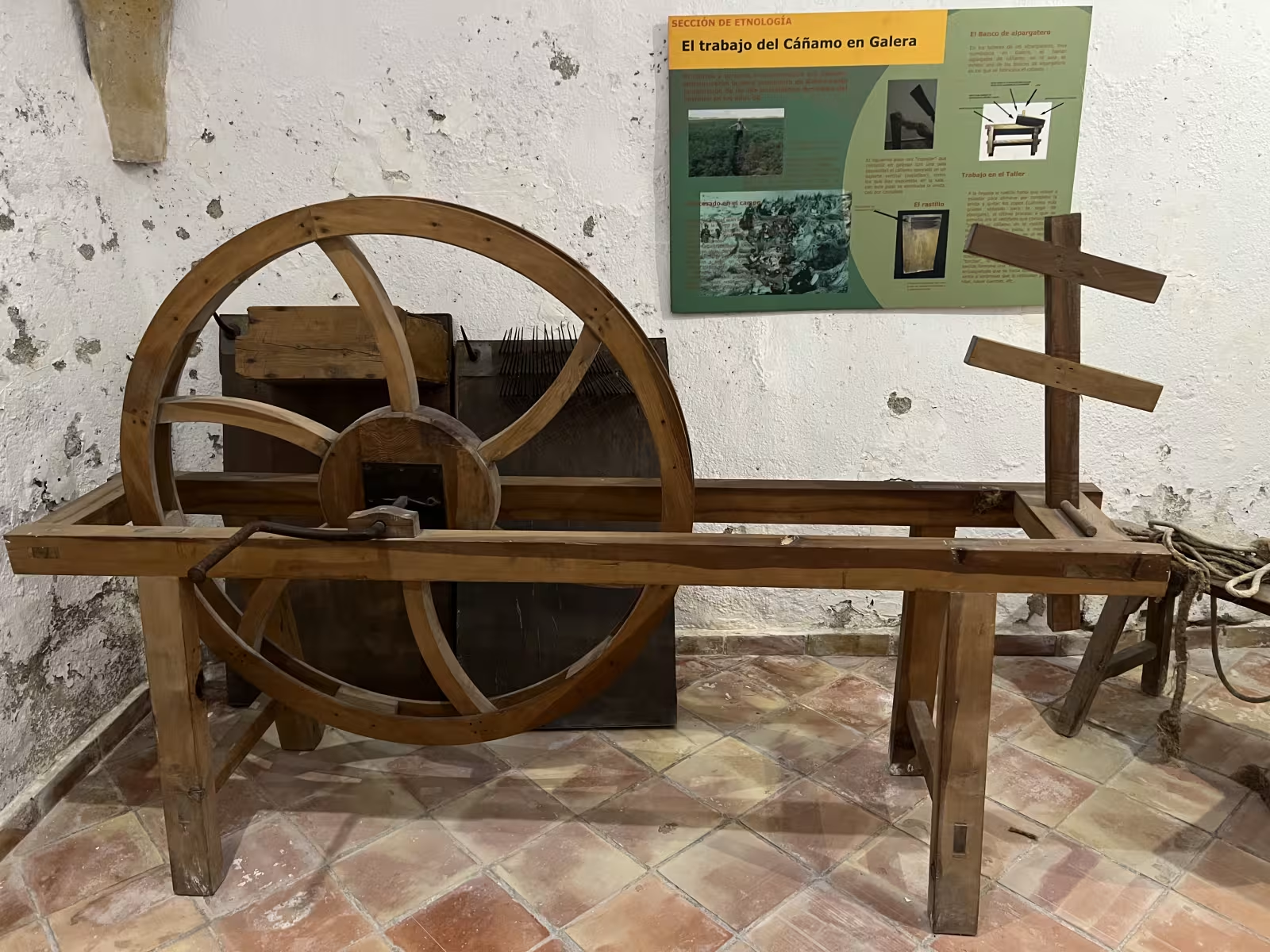
Next came breaking and scutching, known locally as agramado and espadado, in which the stems were beaten to remove the woody material. Hackling, or rastillado, used a tool with spikes to finish cleaning and combing the fibres. These less familiar words help us understand the effort and skill needed to transform the harvest.
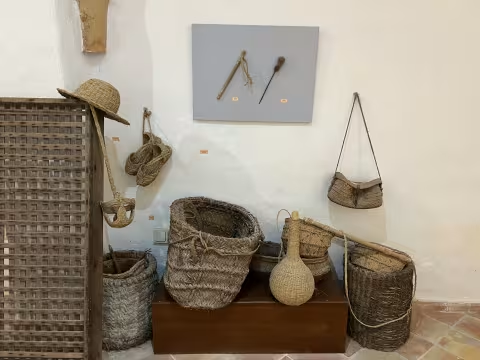
The cleaned fibre was gathered into hanks called torcios. Twenty-four torcios made a mateta, ready for sale. Even this way of organising the product preserves a small part of the trade’s vocabulary. Lower-quality fibre also found a use, for example in the soles of espadrilles.
From the workshop to the kitchen
The plant’s uses reached other parts of the home. Its seeds, known as cañamones, were used in crespillos, local flat cakes made with oil and seeds. The story of hemp thus brings together farming, the making of everyday objects and the memory of local flavours.
Reading the past through its tools
The spread of synthetic fibres in the mid-twentieth century reduced demand for hemp and contributed to job losses and emigration. Understanding this change allows us to see the surviving tools as witnesses to a transformation that affected many families.
In the museum, look at the spikes, wooden supports and working implements. Think of how many hands were involved before a fibre was ready to use. Discover Galera Museum and explore this part of local history through the objects and knowledge of the people who lived it.