
GALERA · Heritage and traditional life
Esparto grass: a landscape woven by hand
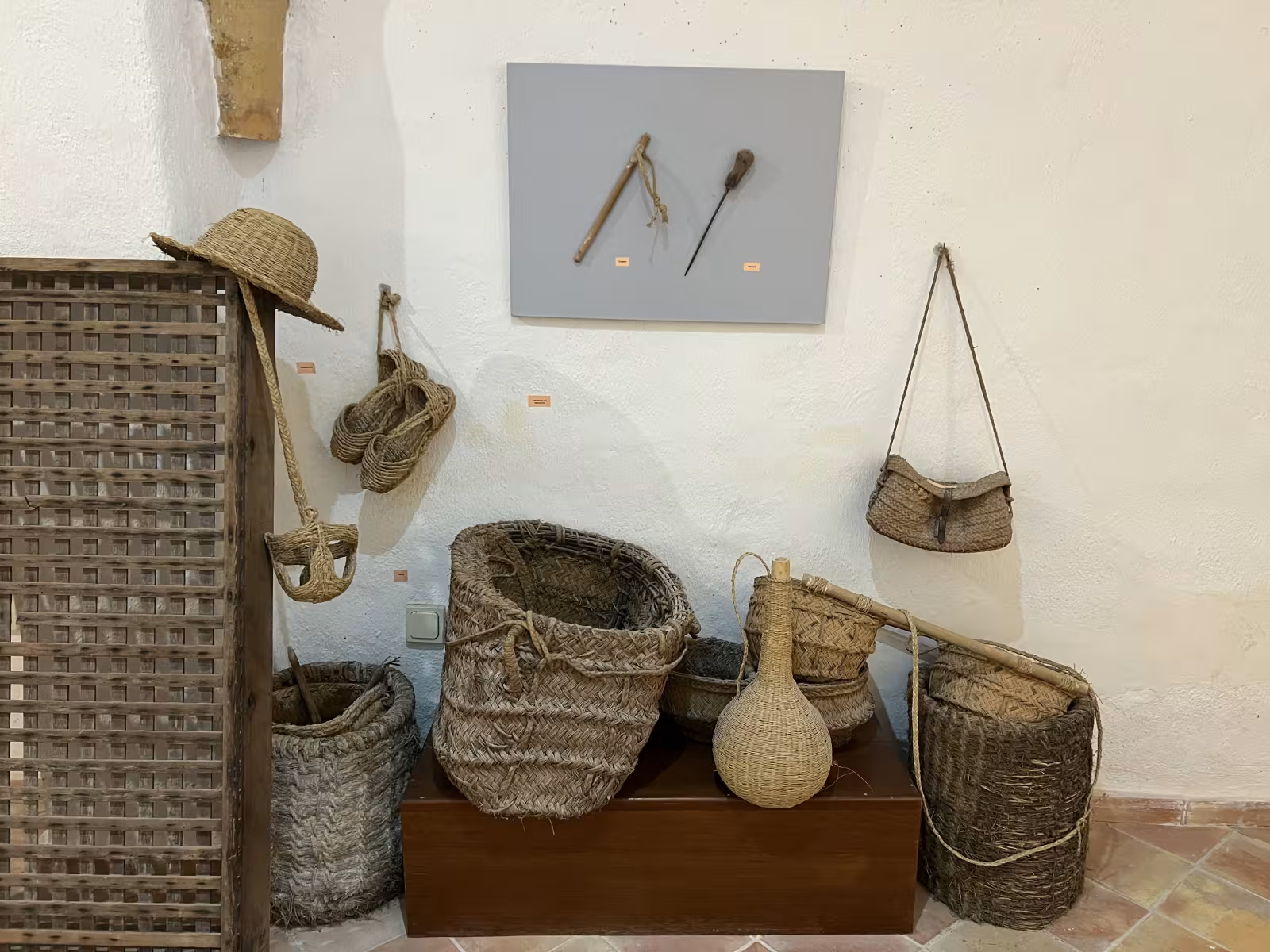
A basket can tell you a great deal about a village. Its fibres reveal the landscape it came from, the work of the person who gathered the plant and the skill of the hands that shaped it. In Galera, esparto grass offers a way to discover this relationship between nature and daily life: a plant from dry ground that could become rope, footwear, a mat or a container.
From the hillside to the craftsperson’s hands
Before weaving could begin, the raw material had to be understood. The grass was gathered in summer using a tool described on the museum’s information panel as a cogeor: a small rod around which a handful of grass was wound before being pulled. This simple implement is a reminder that even the first step of the craft called for experience.
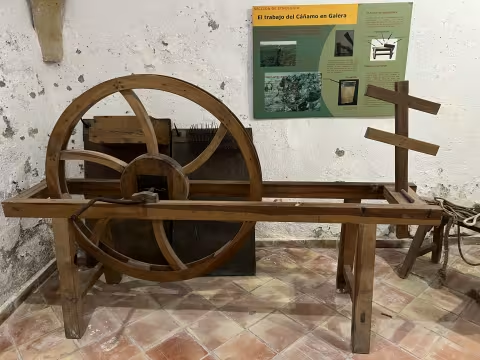
Preparation then took time. The esparto was left to dry for about ten days and kept under water for around a month to make it more flexible. In the language of this craft, «cocer» the esparto meant soaking it, rather than cooking it. For finer work, the fibres were also beaten with a mallet. Between the freshly gathered plant and the finished object lay effort, patience and a detailed knowledge of the material.
A language of plaits
The hands did not always repeat the same pattern. Each type of plait had its own name and structure: pleita could be made with thirteen, fifteen or twenty-one strands, while crisneja used five or seven. These words preserve a way of understanding the material, arranging its fibres and building useful objects from very small elements.
When you look at the pieces, pause over their edges, handles and joins. Follow a plait with your eyes and see where it meets the next one. An apparently simple object begins to reveal the care needed to give it shape and make it useful.
A fibre connecting different ages
Remains of esparto dating from the Bronze Age have survived at Castellón Alto. They offer a much longer perspective on this material and the importance of plant fibres in the history of the area. The museum’s ethnographic objects bring that perspective closer to the needs of domestic life and traditional work.
The next time you look across Galera’s hills, think of the materials they offered and the hands that could transform them. Explore the Galera Museum page and continue discovering a history told through everyday objects, gestures and skills.